
Adult arrhythmias
Atrial fibrillation
What atrial fibrillation is, how it may present and which treatment options are considered for each patient.
Atrial fibrillation (AF) is the most frequent arrhythmia in adult population. It usually begins with self-terminating episodes, but progressively tends towards longer duration finally becoming a permanent heart rhythm.
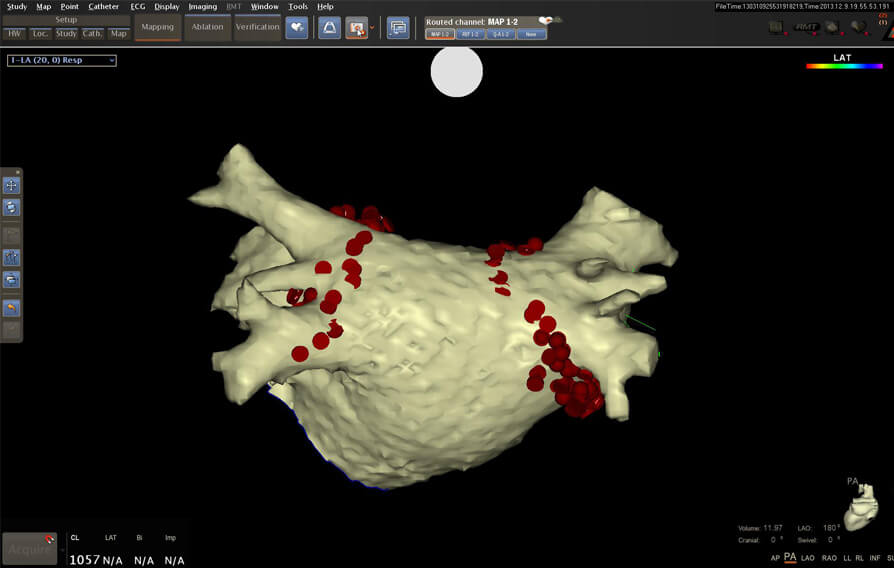
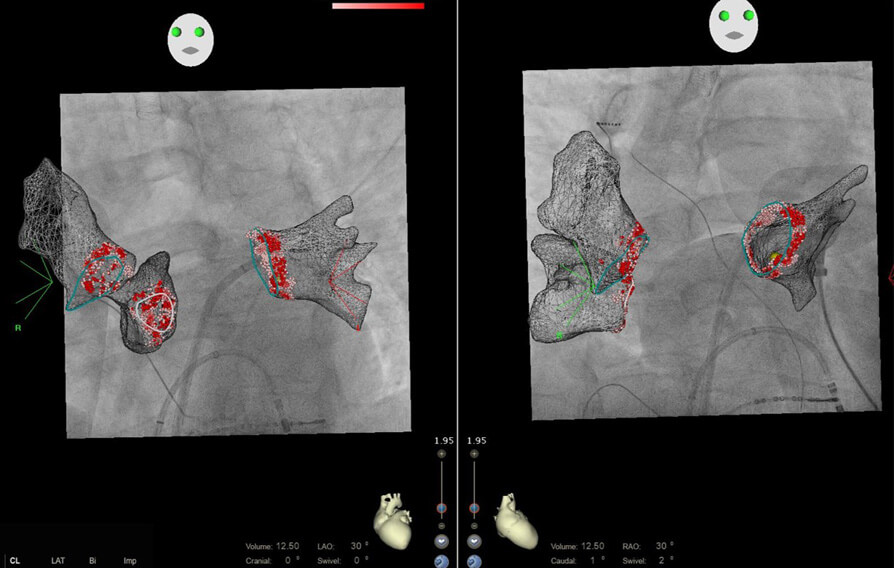
AF is often asymptomatic and requires no antiarrhythmic treatment, but not infrequently causes symptoms and must be treated. Antiarrhythmic drugs are usually the initial treatment, but in patients in whom this treatment shows limited efficacy, with recurrent episodes, or poor tolerance due to side effects, catheter ablation can be considered, with efficacy rates around 60 to 70%.
The absence of symptoms does not remove the need to assess stroke risk. Prevention of complications, including anticoagulation when indicated, is considered individually.
Clinical reference: European Society of Cardiology atrial fibrillation guidelines (2024).